In 2025, Content for Good & Co. asked a simple question: Are marketers willing to make changes in their work for people and the planet?
In 2026, the answer is a solid yes.
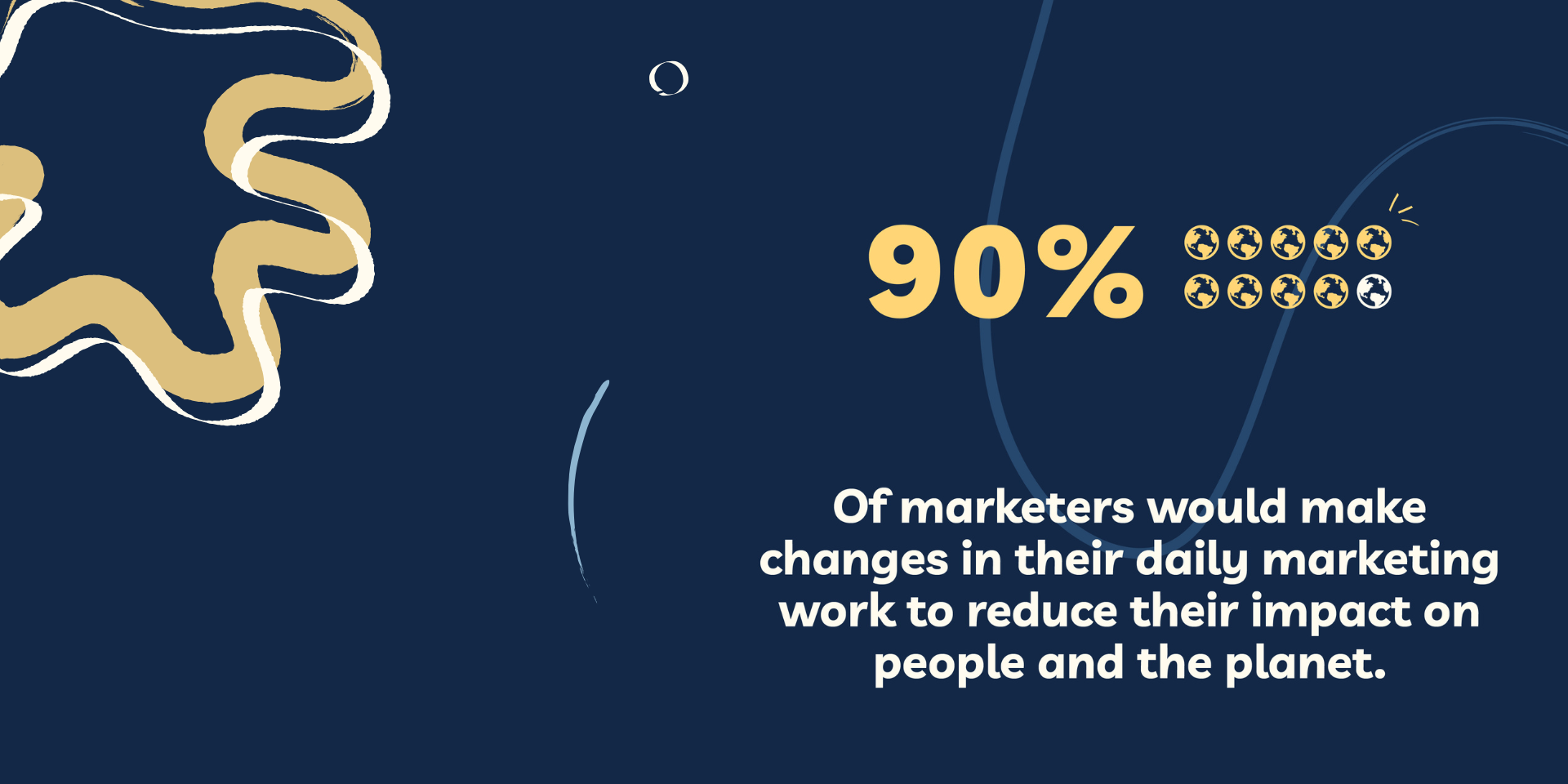
According to the 2026 Forces for Good global survey by Content For Good & Co., 90% of marketers and creatives are ready to change their daily workflows to prioritise environmental and social impact, a clear sign of professional (and moral) evolution.
[DOWNLOAD THE FULL 2026 REPORT]
Learn more about our yearly report and the movement in this video:
A global shift
In early 2025, we surveyed a committed group of Berlin-based marketers and communicators. And we discovered that:
- 87% cared deeply about the planetary crisis.
- 75% thought about climate change at least once a week.
- 75% said they would change their daily work if they knew how.
- 62% cited their CMO or Marketing Director as a barrier.
If the 2025 survey revealed a value–action gap, in 2026, it’s noticeable that the conversation has moved forward. The data now reflects a broader industry trend, showing that sustainable marketing is gaining momentum.
The 2026 headline: 90% want to rewire for good
The most striking insight this year is that 90% of respondents are willing to change their daily marketing workflows to prioritise environmental and social impact.
That includes:
- Rethinking campaign narratives.
- Challenging unsustainable briefs.
- Embedding sustainability into KPIs.
- Aligning brand storytelling with planetary boundaries.
- Questioning green claims and avoiding greenwashing.
- Redefining what “growth” actually means.
Marketing’s historical mandate was to drive consumption: more reach, more sales, more frequency.
The new mandate emerging is clarifying what marketing can be. To use narrative power to support restoration, resilience, and regeneration. A recalibration of the marketer’s professional responsibility is long overdue.
Sustainability is no longer abstract
Climate disruption is visible in rising sea levels that threaten coastal cities and in shifting food systems. Legally, regulations are tightening, and greenwashing fines are increasing.
From a marketing perspective, the tone has also changed. As sustainability-focused marketing leader Angeley Mullins explains:
“We’re getting away from greenwashing and moving toward real stories. We’re finding out what sustainability actually means for everyday people, in their city, in their work.”
Sustainable marketing in 2026 is grounded in lived experience. It moves away from vague “eco-friendly” claims toward measurable, accountable narratives.
The barrier remains: Leadership alignment
But despite strong individual willingness, friction persists.
In 2026, 36% of respondents identified communication breakdown with their Marketing Lead or CMO as their primary barrier to action.
This echoes 2025’s findings: the gap is in alignment, not in awareness.
Marketers want to act, but without visible leadership commitment, progress stalls.
“You need champions. Things move forward because someone keeps pushing. You don’t need a perfect plan.”
Angeley Mullins
This insight shifts responsibility upward. We already have all the sustainable talent we need, but teams are still lacking institutional clarity.
Marketing as a lever for systemic change
In 2025, we observed a substantial value–action gap. Marketers cared, but lacked tools, support, or leadership direction.
In 2026, the willingness is stronger and more explicit. As the industry is moving from passive concern to operational intent, the question now is: Are organisations ready to empower the new wave of ecomarketers?
“Few industries have a comparable reach to marketing. It influences: consumer behaviour, purchasing patterns, brand reputation, and even cultural patterns. “Marketing has spent decades perfecting the art of driving consumption. Now, we’re seeing a historic shift as the industry’s greatest minds realise that those same levers of influence are our best hope for driving climate action. 90% of marketers ready for change are looking to redefine the purpose of our profession.”
Megan Thudium
And what does that mean for marketing leaders in 2026? If you are a CMO, Marketing Director, or agency founder, this data carries implications: Your team is ready and well aware if there’s any leadership hesitation.
For leaders, the competitive advantage lies in alignment with the sustainability team.
Methodology
The 2026 Forces for Good Survey was distributed globally to marketers and creatives across agencies, in-house teams, and independent practices. Respondents represented diverse seniority levels and geographic regions.
The survey measured:
- Willingness to integrate sustainability into daily workflows.
- Perceived leadership barriers.
- Climate awareness.
- Operational readiness.
- Professional identity shifts.
The full report includes detailed data breakdowns and practical leadership recommendations.
What are the ecomarketer’s next steps?
In 2025, the message was: translate awareness into action. In 2026, the workforce will already be willing.
The next step is structural alignment:
- Clear sustainability KPIs.
- Cross-departmental collaboration.
- Transparent climate claims.
- Climate literacy training.
- Leadership accountability.
If marketing helped build consumer culture, it can also help reshape it to serve people and the planet better.
The momentum is building, and a considerable percentage of marketers are ready.
Download the 2026 Forces for Good survey report to explore the full findings and understand what sustainable marketing leadership looks like now.
[DOWNLOAD THE 2026 SURVEY REPORT]
At Content For Good & Co., we believe better communication leads to better climate and social outcomes. That’s why we help marketers and communicators build confidence in sharing sustainability efforts without slipping into greenwashing or falling into the trap of greenhushing.
Discover our training bespoke workshops tailored to marketing teams everywhere.